| Se trata de una de las mejores novelas de ciencia ficción del siglo XXI… |

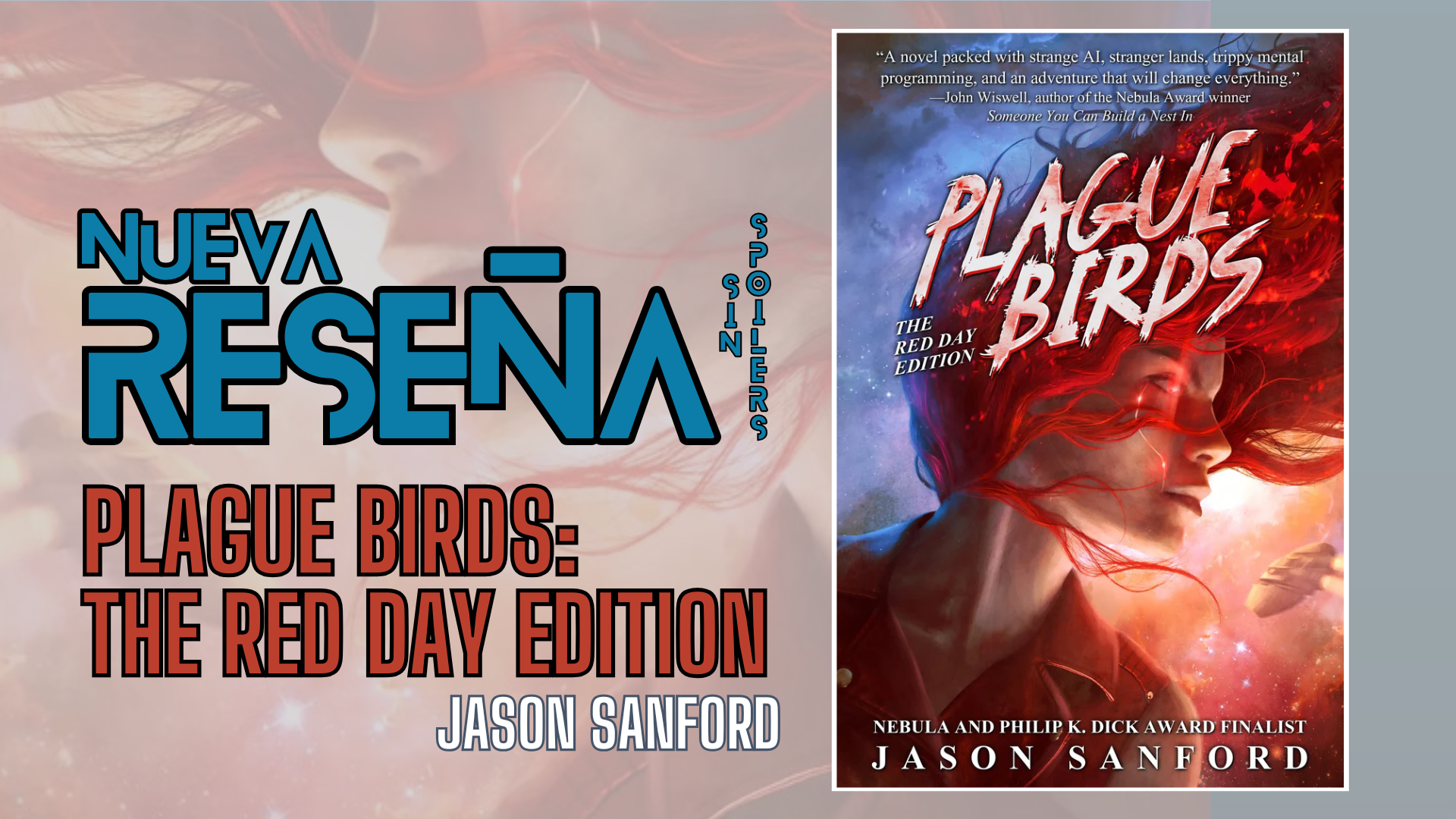
Reseña de PLAGUE BIRDS: THE RED DAY EDITION de Jason Sanford y publicada por Apex Book Company (2026) | «Una historia original, deslumbrante y ambiciosa de ciencia ficción que demuestra que existen variantes posibles para sorprendernos e ilusionarnos dentro del género.»
Apex Book Company ha publicado hace escasos días la reedición de una de las novelas más sorprendentes de la ciencia ficción contemporánea. Se trata de PLAGUE BIRDS: THE RED DAY EDITION. Tuve la suerte de leerla hace unos meses cuando la publicó en español el sello Dolmen Editorial baja el título AVES DE LA PESTE y en la última semana la he disfrutado nuevamente, ahora en inglés, y además con material extra que aporta esta nueva edición.
La historia se ambienta en un futuro lejano y devastado, en el que la humanidad ha sido alterada genéticamente y vive en comunidades aisladas donde las antiguas inteligencias artificiales aún imponen justicia. Crista, una joven que ha vivido una vida tranquila en una aldea, se ve forzada a asumir el rol de un ave de la peste, un ser mitad humano mitad IA encargado de castigar crímenes mediante la destrucción física de los culpables. A medida que viaja por un mundo lleno de violencia, secretos y mutaciones, Crista debe enfrentarse no solo al peso de su nueva identidad, sino también a los oscuros secretos de su pasado y a un sistema de justicia profundamente cuestionable. En su camino, se convierte en testigo de las grietas éticas que sostienen este mundo y empieza a luchar por algo más que obedecer órdenes: encontrar una nueva forma de justicia.
Lo que comienza como una búsqueda para descubrir la verdad sobre la muerte de su madre acaba convirtiéndose en una aventura repleta de conspiraciones, secretos enterrados durante milenios y enemigos capaces de alterar recuerdos, percepciones e incluso la propia realidad.
Lo primero que llama la atención es la extraordinaria imaginación que desprende el mundo creado por Jason Sanford. No es frecuente encontrar una novela capaz de mezclar ciencia ficción, fantasía oscura, biopunk y aventura sin que el resultado parezca un collage imposible. Aquí, sin embargo, todo termina encajando con sorprendente naturalidad. Hay híbridos entre humanos y animales, aldeas de apariencia medieval protegidas por inteligencias artificiales, bosques conscientes, tecnologías ancestrales y criaturas que parecen salidas de un cuento fantástico, aunque detrás de todas ellas exista una explicación científica. Esa combinación convierte cada capítulo en un descubrimiento.
Uno de los mayores aciertos está en la forma en que el autor presenta ese universo. En lugar de detener la historia para ofrecer largas explicaciones, deja que el lector reconstruya el funcionamiento del mundo a través de los acontecimientos. Al principio esto puede resultar algo desconcertante. De hecho, las primeras páginas exigen cierta paciencia porque da la sensación de haber llegado tarde. Sin embargo, conforme las piezas comienzan a colocarse en su sitio, esa aparente confusión se transforma en una de las mayores virtudes de la novela.
Crista funciona muy bien como protagonista y gran parte del atractivo del libro nace precisamente de la relación que desarrolla con Día Rojo, la inteligencia artificial unida a ella. Sus conversaciones alternan momentos de humor, tensión y cierta ternura inesperada, creando una dinámica que evita que la historia se vuelva excesivamente solemne. Resulta fácil afirmar que el lector disfrutará tanto con sus discusiones como con las muchas escenas de acción.
Y eso no significa que la acción sea escasa. Todo lo contrario. La novela mantiene un ritmo muy constante gracias a una sucesión de persecuciones, enfrentamientos y revelaciones que rara vez permiten acomodarse. Pero el verdadero motor del libro no son las batallas, sino los misterios. Cada respuesta abre dos preguntas nuevas, y cuando parece que por fin se comprende lo que está ocurriendo, aparece otra revelación capaz de darle la vuelta a todo sin sentirse gratuita.
También merece una mención especial el tratamiento de algunos temas de fondo. Aunque la novela nunca deja de ser una aventura entretenida, bajo la superficie plantea cuestiones interesantes sobre la identidad, la memoria, la justicia y el poder. ¿Qué ocurre cuando una inteligencia artificial posee una capacidad casi absoluta para decidir quién merece vivir o morir? ¿Hasta qué punto pueden confiar los personajes en unos recuerdos que quizá hayan sido alterados? ¿Qué significa seguir siendo humano cuando el propio concepto de humanidad ha cambiado por completo? Son preguntas que aparecen integradas en la trama.
Otro aspecto especialmente conseguido es el equilibrio entre oscuridad y emoción. El universo de PLAGUE BIRDS puede resultar brutal: las aves de la peste inspiran auténtico terror, la violencia tiene consecuencias y algunas escenas no escatiman crudeza. Sin embargo, el relato nunca se recrea gratuitamente en ello. Siempre hay espacio para la esperanza, la amistad, el compañerismo o incluso pequeños momentos de humor que alivian momentos de tensión cuando más falta hacen.
Desde una perspectiva literaria más profunda, AVES DE LA PESTE destaca por su enfoque estilístico, su estructura narrativa no convencional y su uso simbólico del lenguaje. Sanford construye un universo que, aunque de raíz tecnológica, se nutre de una imaginería fuertemente alegórica. La sangre, por ejemplo, no solo cumple una función fisiológica o tecnológica, como medio en el que habita la IA, sino también simbólica: es memoria, es vínculo, es herencia. El acto de «abrirse la piel» para liberar a Día Rojo no solo es una herramienta de combate, sino un ritual que evoca sacrificio, conexión y renacimiento. Esta constante dualidad entre lo literal y lo metafórico da a la novela una profundidad literaria que rara vez se encuentra en la ciencia ficción contemporánea.
En cuanto a estructura, Sanford evita el tradicional arco narrativo heroico para presentar una progresión más introspectiva y psicológica. Aunque Crista enfrenta desafíos externos como enemigos, persecuciones y conspiraciones, el verdadero conflicto está en su interior, el de aceptar una nueva identidad, redefinir sus valores, y decidir qué clase de justicia quiere representar.
La voz narrativa es también un elemento destacable. Escrita en tercera persona focalizada, con un fuerte énfasis en la percepción sensorial y emocional de Crista, la novela logra que el lector experimente el mundo como ella lo hace: confuso, hostil, pero también cargado de maravilla. Sanford no busca una objetividad aséptica; por el contrario, abraza la subjetividad para sumergirnos en una experiencia literaria intensa y sensorial.
En comparación con otras obras del género, AVES DE LA PESTE se sitúa en un cruce peculiar entre el biopunk, la ecoficción especulativa y la fantasía posthumanista. Sanford no teme a la ambigüedad y el desconcierto, y explora los límites de la percepción humana frente a entidades que desbordan la comprensión racional.
Además, en esta nueva edición, se corrigen algunos errores menores en el texto principal y ofrece un relato no inédito ambientado cinco meses después de la conclusión de la novela, y que lleva por título LITTLE FATHERS OF DARKNESS. En él recupera a Crista y a la inteligencia artificial Día Rojo en un momento de aparente calma que pronto se ve alterado por un inquietante suceso. Lo que comienza con una escena cotidiana, un simple desayuno en la ciudad de Seed, sirve para mostrar que las heridas del pasado siguen abiertas y que la convivencia entre los habitantes y los temidos aves de la peste dista mucho de ser sencilla. El principal atractivo del relato vuelve a residir en la relación entre Crista y Día Rojo. Sus constantes discusiones aportan un equilibrio muy logrado entre humor, tensión y reflexión. Mientras Crista intenta encontrar su lugar en un mundo que continúa mirándola con recelo, Día Rojo mantiene su peculiar visión de la justicia y de la naturaleza humana, dando lugar a diálogos ágiles y cargados de personalidad. La química entre ambas convierte una conversación aparentemente trivial en una forma muy eficaz de profundizar en sus conflictos internos. El autor también amplía la información sobre la sociedad de Seed, sus prejuicios, las distintas especies que la habitan y las consecuencias de los hechos ocurridos anteriormente. Todo ello hace que el escenario resulte vivo y creíble, al tiempo que despierta la curiosidad por seguir explorándolo. El relato también aborda temas como la identidad, el miedo al rechazo, el peso de la reputación y la dificultad de reconciliar quiénes somos con la imagen que los demás tienen de nosotros. Estas cuestiones se integran de forma natural en la trama, sin restar ritmo a la narración. En conjunto, se trata de una historia breve pero muy efectiva, que funciona como un excelente complemento para la novela. Además de ofrecer una nueva aventura de Crista y Día Rojo, profundiza en sus personajes y deja al lector con ganas de descubrir qué les deparará el futuro. ¿Lo veremos en la novela corta que prepara el autor? Lo sabremos en unos meses.
En un epílogo que acompaña esta nueva edición, el autor reflexiona sobre el uso actual del término «inteligencia artificial» y cuestiona si las herramientas que hoy reciben ese nombre realmente merecen esa etiqueta. A través de un tono cercano y crítico, diferencia los modelos generativos de una auténtica inteligencia, al tiempo que invita al lector a pensar en qué significaría crear o encontrar una inteligencia no humana. También comparte su experiencia como escritor y su visión sobre los desafíos éticos y tecnológicos que rodean este campo. Es un texto interesante que amplía los temas de la novela y deja abiertas preguntas sobre el futuro de la humanidad y la relación entre las personas y la tecnología, sin perder en ningún momento un enfoque reflexivo y divulgativo.
Lo que permanece sin duda al cerrar el libro es la sensación de haber visitado un mundo distinto a cualquier otro. Y eso en la ciencia ficción actual es todo un tesoro.
En definitiva, Jason Sanford firma una novela tremendamente imaginativa que combina aventura, ciencia ficción y fantasía con una naturalidad sorprendente. Puede exigir un pequeño esfuerzo inicial de entrada, pero si disfrutas de mundos complejos, misterios e historias capaces de mezclar reflexión con entretenimiento, esta es una lectura que probablemente vas a disfrutar al máximo.
Muchas gracias al sello Apex Book Company por facilitarme un ejemplar de prensa para que os comente mis impresiones, absolutamente sinceras, sobre esta novela.
***
Adquiere la obra AQUÍ
***
Review of PLAGUE BIRDS: THE RED DAY EDITION by Jason Sanford (Apex Book Company, 2026) | «An original, dazzling, and ambitious science fiction novel that proves the genre still has plenty of room to surprise and inspire.»
Apex Book Company has recently released a new edition of one of the most remarkable science fiction novels of recent years: Plague Birds: The Red Day Edition. I had the opportunity to read the novel a few months ago when it was published in Spanish by Dolmen Editorial under the title Aves de la Peste. Over the past week, I had the pleasure of revisiting it in English, this time accompanied by the bonus material included in this new edition.
The story unfolds in a distant, devastated future where humanity has been genetically altered and now lives in isolated communities while ancient artificial intelligences continue to administer justice. Crista, a young woman who has spent her life in a peaceful village, is forced to become a Plague Bird—a being that is part human, part AI, tasked with punishing crimes by physically destroying those deemed guilty. As she journeys through a world scarred by violence, mutation, and long-buried secrets, Crista must confront not only the burden of her new identity but also the dark truths surrounding her past and a justice system whose moral foundations are increasingly called into question. Along the way, she witnesses the ethical fractures that underpin this society and begins searching for something greater than blind obedience: a new vision of justice.
What begins as a quest to uncover the truth behind her mother’s death gradually evolves into an adventure filled with conspiracies, millennia-old secrets, and enemies capable of manipulating memories, perceptions, and even reality itself.
The first thing that stands out is the extraordinary imagination behind the world Jason Sanford has created. It is rare to find a novel capable of blending science fiction, dark fantasy, biopunk, and adventure without the result feeling like an impossible patchwork. Here, however, everything comes together with remarkable naturalness. Human-animal hybrids, medieval-looking villages protected by artificial intelligences, sentient forests, ancient technologies, and creatures that seem to have stepped out of a fantasy tale all coexist within a setting where every fantastical element ultimately receives a scientific explanation. This combination turns every chapter into a new discovery.
One of the novel’s greatest strengths lies in the way Sanford introduces this universe. Rather than interrupting the narrative with lengthy exposition, he allows readers to piece together how the world works through the unfolding events. At first, this can feel somewhat disorienting. The opening chapters demand a measure of patience, as if the reader has arrived long after the story has already begun. Yet once the various pieces begin falling into place, that initial confusion transforms into one of the novel’s greatest virtues.
Crista is an excellent protagonist, and much of the book’s appeal comes from the relationship she develops with Red Day, the artificial intelligence bonded to her. Their conversations effortlessly alternate between humor, tension, and unexpected tenderness, creating a dynamic that prevents the story from becoming overly solemn. Readers are likely to enjoy their witty exchanges just as much as the novel’s many action sequences.
And action is certainly never in short supply. The novel maintains a consistently engaging pace through a succession of chases, confrontations, and revelations that rarely allow the reader a moment to settle. Yet the true driving force of the story is not its battles but its mysteries. Every answer raises two new questions, and just when it seems the full picture has finally emerged, another revelation arrives to turn everything upside down without ever feeling contrived.
The novel also deserves praise for the way it explores its underlying themes. Although it never ceases to be an entertaining adventure, beneath the surface it raises compelling questions about identity, memory, justice, and power. What happens when an artificial intelligence possesses nearly absolute authority to decide who deserves to live or die? To what extent can anyone trust memories that may have been altered? And what does it mean to remain human when the very concept of humanity has fundamentally changed? These philosophical questions are seamlessly woven into the narrative rather than presented as abstract discussions.
Another particularly successful aspect is the balance between darkness and hope. The world of Plague Birds can be brutally unforgiving. The Plague Birds themselves inspire genuine terror, violence carries lasting consequences, and several scenes spare little in their depiction of brutality. Yet the novel never indulges in grimness for its own sake. There is always room for hope, friendship, companionship, and even moments of humor that provide welcome relief when the tension reaches its peak.
From a literary standpoint, Plague Birds distinguishes itself through its distinctive prose, unconventional narrative structure, and rich symbolic language. Although Sanford’s world is firmly grounded in advanced biotechnology, it is also steeped in striking allegorical imagery. Blood, for instance, functions not merely as the biological medium through which Red Day exists, but also as a symbol of memory, inheritance, and human connection. Every time Crista cuts open her skin to release the AI, the act transcends its practical purpose, becoming a ritual of sacrifice, trust, and rebirth. This constant interplay between the literal and the symbolic gives the novel a literary depth rarely found in contemporary science fiction.
Rather than following the familiar trajectory of the traditional heroic quest, Sanford builds a far more introspective narrative. Crista certainly faces external dangers—hostile creatures, relentless pursuers, and increasingly complex conspiracies—but the novel’s true conflict lies within. Her greatest challenge is accepting the person she is becoming, redefining her moral compass, and deciding what justice should truly mean in a world where its traditional foundations have long since collapsed.
The narrative voice is equally effective. Told through a close third-person perspective that remains tightly focused on Crista’s emotional and sensory experiences, the novel invites readers to discover its world alongside her. Like Crista, we are often confused, overwhelmed, and fascinated in equal measure. Sanford avoids detached exposition, preferring instead to immerse readers directly in an experience that feels immediate, visceral, and intensely personal.
Within today’s speculative fiction landscape, Plague Birds occupies a fascinating space where biopunk, speculative ecofiction, posthumanist fantasy, and science fiction converge. Sanford embraces ambiguity rather than resisting it, exploring the limits of human understanding when confronted with intelligences and realities that exist far beyond conventional perception.
This new edition also benefits from several minor corrections to the original text while adding a welcome bonus: Little Fathers of Darkness, a new story set five months after the events of the novel.
The story reunites readers with Crista and Red Day during what appears to be a rare moment of peace before an unsettling incident shatters the calm. Beginning with something as ordinary as breakfast in the city of Seed, the narrative quickly demonstrates that the scars left by previous events remain painfully fresh and that coexistence between ordinary citizens and the feared Plague Birds is anything but straightforward.
Once again, the greatest pleasure comes from watching Crista and Red Day interact. Their conversations effortlessly balance humor, friction, and philosophical reflection, creating dialogue that feels both entertaining and revealing. While Crista struggles to define her place in a society that continues to regard her with suspicion, Red Day remains unwavering in its singular view of justice and humanity. Their contrasting perspectives generate some of the story’s most memorable moments, transforming seemingly mundane conversations into compelling explorations of character.
At the same time, Sanford expands the reader’s understanding of Seed itself, exploring its culture, prejudices, diverse inhabitants, and the lingering consequences of the novel’s climax. The setting grows richer and more convincing with every page, reinforcing the sense that this is a living world whose stories are far from over.
Despite its relatively short length, Little Fathers of Darkness explores themes every bit as compelling as those found in the novel itself. Identity, prejudice, reputation, and the struggle to reconcile one’s true self with society’s expectations are woven naturally into the narrative without ever slowing its momentum.
As a companion piece, the novella succeeds admirably. It offers another engaging adventure while deepening Crista and Red Day’s relationship and leaving readers eager to discover where their journey will lead next. If Sanford’s planned follow-up novella continues in this direction, there is every reason to be excited.
The volume concludes with a thoughtful epilogue in which Sanford reflects on the contemporary use of the term «artificial intelligence.» With clarity, humor, and healthy skepticism, he questions whether today’s generative models truly deserve that label, drawing an important distinction between sophisticated pattern prediction and genuine intelligence. He also shares insights into his own creative process while reflecting on the ethical and technological questions that inspired the novel. The result is an engaging essay that broadens many of the book’s central ideas while encouraging readers to think more deeply about humanity’s future relationship with intelligent machines.
Few science fiction novels leave readers with the unmistakable feeling that they have explored a world unlike any they have encountered before. Plague Birds is one of those rare books. Long after the final page, what lingers is not simply the plot or its many twists, but the vivid impression of having experienced something genuinely original.
With Plague Birds, Jason Sanford has crafted an ambitious, imaginative, and deeply rewarding novel that seamlessly blends science fiction, fantasy, adventure, and philosophical inquiry into a remarkably cohesive whole. Its opening chapters ask readers to place their trust in the story before all the pieces become clear, but that trust is richly rewarded. Those willing to embrace its mysteries will discover one of the most inventive and emotionally satisfying works of speculative fiction in recent years.
My sincere thanks to Apex Book Company for providing a review copy of this new edition. As always, the opinions expressed here are entirely my own.
Si te ha gustado esta entrada y quieres estar al tanto de otras reseñas y novedades relacionadas con la literatura de fantasía, terror y ciencia ficción, además de otros espacios de cultura afines como cómics y adaptaciones de cine/tv, síguenos en X (antes Twitter) y también en nuestra cuenta de Instagram haciendo click en las imágenes siguientes: